
Over time, have you started turning the television up a little louder? Perhaps conversations in a busy cafe feel harder to follow, or maybe you have caught yourself asking “Sorry, what was that?” more often than you used to? Small changes like this are easy to brush aside. You might blame them on someone mumbling, a noisy room, or simply being tired. But when they start happening regularly, they could signal that your hearing has changed.
Hearing changes often happen gradually, so you might not notice them right away. In fact, the people around you may notice before you do. So, how do you know when it is time for a hearing test? Keep reading the blog to know what some of the everyday signs are worth paying attention to.
Key takeaways:
- How do I know if my hearing has changed?
- 7 everyday signs you might need a hearing test
- Is it hearing loss or could your ears simply be blocked?
- What if you have ringing or buzzing in your ears?
- When should you book a hearing test?
- What happens during a hearing test?
- Take the guesswork out of your hearing
- FAQs
How do I know if my hearing has changed?
Hearing loss does not always mean sounds suddenly become quiet; for many people, the first changes are much more subtle. You might hear someone speaking but struggle to make out what exactly they are saying. You may follow a conversation perfectly well at home but lose track of it as soon as you are somewhere busy, or instead you may have started relying on subtitles when watching television.
Over time, you might adjust without even realising it; you turn up the volume, sit closer to the speaker, avoid noisy places; these small adjustments can make changes in your hearing less obvious. That is why it helps to notice how you hear in different parts of everyday life.

7 everyday signs you might need a hearing test
You can hear people talking, but miss some of the words
This is one of the changes you might find confusing; you know someone is speaking, but parts of what they say sound unclear or seem to disappear. It might feel as though everyone has started mumbling; certain words may also be easier to understand than others. If this happens regularly, especially during face-to-face conversations, a hearing test can help you understand why.
- Conversations are harder when there is background noise
Places like restaurants, family gatherings, cafes, and busy shops bring lots of sounds together at once. If you have started finding it difficult to separate someone’s voice from everything happening around you, you may notice yourself concentrating much harder on conversations or missing parts of what people say. Difficulty following speech in noisy environments is a common sign of hearing loss and is worth discussing with an audiologist.
You ask people to repeat themselves more often
Everyone misses a word from time to time, but if “pardon?” or “Could you say that again?” becomes a regular part of your conversation, then pay attention to the pattern. You might notice it happens more with certain voices, when someone speaks from another room or when many people are talking at the same time. Sometimes the people closest to you will notice this change first.
The television keeps getting louder
Has someone in your household commented on the television volume recently? You might feel the volume is comfortable while everyone else thinks it is too loud. You may also find dialogue harder to follow than music or sound effects, which may lead you to use subtitles more often. Instead of continuing to increase the volume, consider having your hearing checked.
Telephone conversations feel harder to follow
Phone calls remove the visual cues you get in person, where it is natural to use movements and facial expressions. If you have started switching the phone between ears, turning up the volume, or struggling to understand what someone is saying on a call, this is another change worth mentioning during your hearing test.
Listening feels tiring
Have you ever left a conversation feeling surprisingly exhausted? When hearing becomes more difficult, you might spend more energy concentrating, filling in missing words and trying to keep up with what is being said. This extra effort to listen can make long conversations, meetings or social occasions feel more tiring or frustrating.
Your family has noticed a change
Sometimes someone else spots a change in your hearing before you do. Your partner might mention the television volume; your children might notice you do not always respond when they call you. Friends might notice you repeat things more than usual. It is easy to dismiss these comments, especially when you feel your hearing is still fine, but if more than one person has mentioned it, a hearing test is a simple way to find out what is going on.
Is it hearing loss or could your ears simply be blocked?
A change in your hearing does not automatically mean you have permanent hearing loss. Earwax protects your ears, but sometimes too much builds up and blocks them; this may leave your ear feeling full or blocked and can affect how well you hear.
Other possible reasons for hearing changes exist, which is why trying to diagnose the problem yourself isn’t always helpful. At Hear4U, we can check your ears and talk through what you have been experiencing. If earwax is causing the problem, our team can advise you on the appropriate next step and gently clear the blockage when suitable.
What if you have ringing or buzzing in your ears?
This sound is known as tinnitus, and it does not come from any outside source. People often describe it as ringing, buzzing, humming or whooshing. Tinnitus does not always mean you have hearing loss, but the two can occur together. If you have recently started experiencing tinnitus, or it’s become more noticeable alongside changes in your hearing, arranging a hearing test is a great place to start. At Hear4U, we offer tinnitus counselling, where you can learn what you need to know about tinnitus if you have it or someone you know does.

When should you book a hearing test?
You do not need to wait until hearing becomes a major difficulty. If you regularly struggle to follow conversations, turn up the TV volume, ask people to repeat themselves, or feel your hearing isn’t as clear as it used to be, it is worth getting checked. A hearing test will give you a clearer picture of your hearing and help you understand what, if anything, comes next. There is one important exception: if you experience sudden hearing loss in one or both ears, or your hearing becomes noticeably worse over a few days or weeks, seek medical advice promptly rather than waiting for a routine hearing test.
What happens during a hearing test?
A hearing test with us at Hear4U is more than a quick check; our audiologists follow a detailed assessment process to understand your hearing, your ear health and how you hear in everyday situations.
Step 1: Medical history and discussion
We start with a friendly conversation about your hearing, lifestyle, medical history and any concerns you may have.
Step 2: Video otoscopy
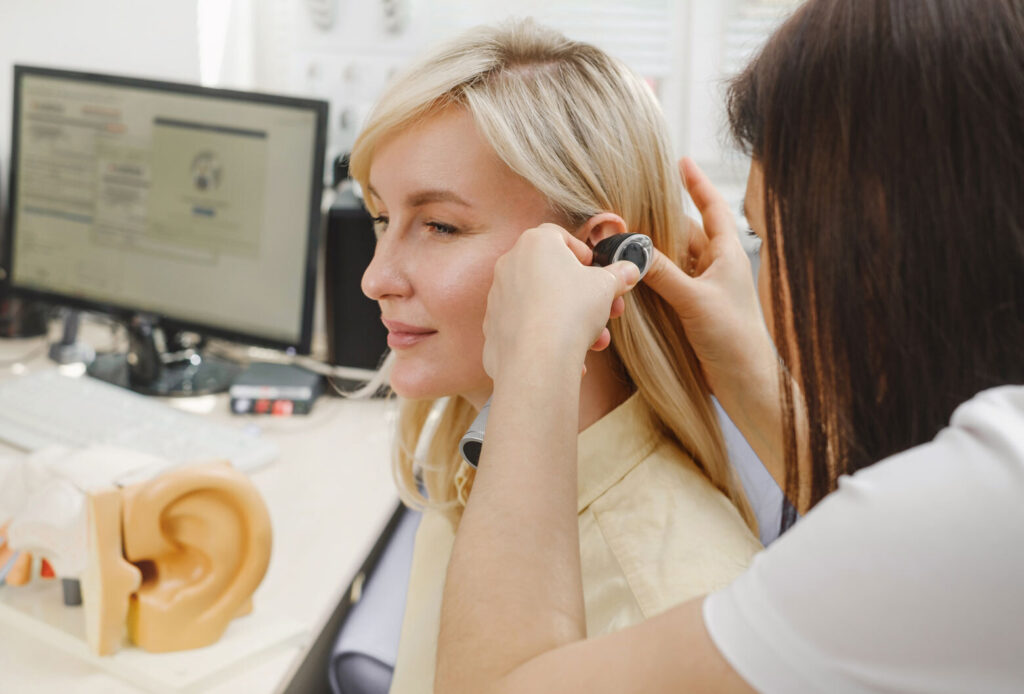
We use a tiny camera to look inside your ear canal and check your eardrum, ear health and any wax build-up.
Step 3: Full in-depth hearing test
We test your hearing across different pitches and volumes using both air conduction and bone conduction testing.
Step 4: Middle ear test
We carry out tympanometry to check how your eardrum and middle ear are working.
Step 5: Speech-in-noise test
We assess how well you understand speech with background noise, which helps us understand real-life hearing difficulties.
Step 6: Hearing summary and recommendations
We explain your results clearly, including your audiogram, type and level of hearing loss, and the best next steps for you.
Step 7: Hearing aid demonstrationIf hearing aids are recommended, we will demonstrate suitable options and use real ear measurement technology to support a more accurate fitting.
A hearing test with us is an opportunity for us to discuss your results and ask questions. It does not mean you are committing to a hearing aid straight away; it simply gives you information about your hearing so you know where you stand.
Take the guesswork out of your hearing
You do not need to know whether you have hearing loss before booking a hearing test; finding that out is exactly what the test is for.
At Hear4U, we are a family-run hearing care provider led by second-generation audiologists. Our friendly team offers FREE hearing tests at our clinics in Hinckley, Leicester, Rothwell (Kettering), and Newark, with home visits also available for people who would prefer to have their hearing checked from the comfort of their homes.
FAQs
Q. How do I know if I need a hearing test?
If you are constantly struggling to understand conversations, asking people to repeat themselves, turning the television up or finding speech difficult to follow in noisy places, it is worth having your hearing checked. A hearing test can show whether your hearing has changed and what your next steps might be.
Q. What are the first signs of hearing loss?
There are several signs, and they include difficulty in understanding speech, particularly in background noise, needing a higher television volume, missing parts of conversations and asking people to repeat themselves more often. Hearing loss often develops gradually, so these changes may initially be easy to overlook.
Q. Should I have a hearing test if I am able to hear most of the time?
Yes, hearing difficulties are not always noticeable in every single situation. You might hear well in a quiet room but struggle in a noisy environment. If you have noticed a repeated change in certain situations, a hearing test can give you a clearer understanding of your hearing.
Q. Can earwax lead to hearing loss?
A build-up of earwax can block the ear canal and affect your hearing; it can also cause a feeling of fullness or blockage in your ears. A hearing test can help show whether wax may be contributing to the change you have noticed.
Q. How often should adults have their hearing tested?
There are multiple factors, such as age, hearing history, and exposure to loud noise. If you notice any change in your hearing between routine checks, however, you do not need to wait for the next hearing test. Speak to a hearing test clinic and book your appointment.